Pages

Wednesday, 27 December 2017

Day 3: The Great Depression (The 1930s)

Day 3: The Great Depression (The 1930s)


Unfortunately, the wealth and success of the 1920s did not continue into the 1930s. Instead
, the stock market in America crashed on Tuesday 29 October 1929. When this happened,
people lost a lot of money and much of the world sunk into a deep, financial depression.
The 1930s is often referred to as the ‘Great Depression.’


Activity 1: Dealing with Stress


In New Zealand, many people lost their jobs during this decade. Experts predict that as
much as 30% of the population was unemployed. It was a very stressful time for families.


Sadly, many of us still experience stress in our lives to this day. When I feel stressed
I try to go for a walk or pop into my local gym for a quick workout. Exercise makes
me feel better. What about you?


On your blog, please tell us what you do when you want to relax or de-stress.
Do you read a favourite book, watch a favourite television show or talk to someone special?
 What are your tips for dealing with stress?
  1. Have a drinks
  2. Get some fresh air
  3. Got for a walk
  4. Talk to somebody
  5. And read a book


Activity 2: Offering a Helping Hand
During this period, people struggled to find work both here at home and overseas.
It was a really tough time for people living in the Great Plains of the United States
because they were hit with a huge drought that lasted for most of the decade.
Many crops were damaged and farmers were not able to make enough money
to feed their families.


Imagine that you were alive in the 1930s. What could you have done to help these
families? On your blog, list three different ways that you could raise funds for
families to help them buy food and clothing. Be as creative as you can with your
fundraising ideas!


  1. Making clothes or blankets
  2. Donate them some money to buy food
  3. Grow some food
  4. Help them with the food and clothes
  5. If i was in the 1930s i would have donated them some money a gives them
  6. food cloths blankets to sleep with i would. What about you guys?

Bonus Activity: Paying it Forward

In the mid-1930s, things began to change for the better in New Zealand.
More people were able to find work and receive a steady paycheck.
They were still careful, however, with their money and rarely, if ever, bought treats
or gifts for one another.


Imagine that you were able to travel back in time to visit a family in the 1930s.
What special gifts or treats would you like to bring with you?
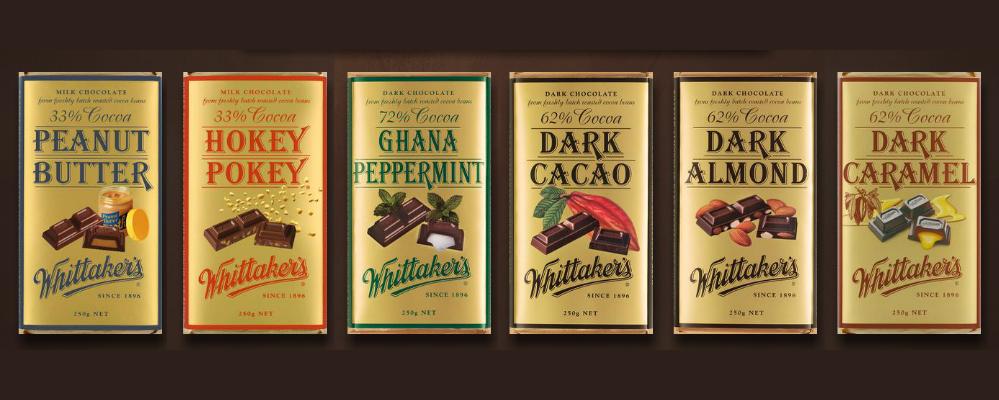
I would likely bring blocks of Whittaker’s chocolate, bags of Jet Planes
and Pineapple Lumps, healthy food snacks, clothing, and games for the children.
What about you?


If i travel back in time to vist a family inj the 1930s my gif would be
  1. T.V
  2. Phones
  3. Chococlate box
  4. Wittaker’s
  5. Pineapple lump
  6. Healthy food
  7. Snacks
  8. Clothing
  9. Games
  10. laptops
!!!!!!BONUS POINTS: 6!!!!!!!!!!

Friday, 22 December 2017

Day 5: The Dawn of a New Era…

Day 5: The Dawn of a New Era…


From the 1840s onwards, many European settlers came to live in New Zealand. It was a
difficult period in New Zealand’s history. As the settlers began to outnumber the Māori,
a great war erupted between the two groups as they fought for access to land to build homes
and establish communities.


Activity 1: Translating Phrases


Unlike the Māori, many of the European settlers didn’t speak Te Reo Māori. Instead, they
spoke English. As you can imagine, it was very difficult for the two groups to communicate
because they did not have a dictionary or a translator. These days we are able to use the
Internet to translate words and phrases from one language to another.


Use Google Translate to translate the following five phrases from English to Te Reo Māori
or from Te Reo Māori to English. Post the translations on your blog. Be sure to include the
phrase in both the English and Māori to earn full points.


Phrases:

  1. Nau mai ki Aotearoa.
  2. ____ is my name.
  3. What is your name?
  4. He pai taku ki te takaro i te whutupaoro.
  5. Where do you come from?

Welcome to new zealand
Maria is my name.
What is your name ?
I like playing touch
Where do you come from new zealand .
Nau mai ki te zealand hou
Ko Maria toku ingoa.
He aha to ingoa?
He pai taku ki te takaro ki aku hoa
i haere mai au mai i Niu Tireni


Activity 2: The Treaty of Waitangi


On 6 February 1840, a very special document was signed by the Māori chiefs
and the British settlers in New Zealand. It was called the Treaty of Waitangi
(Te Tiriti o Waitangi) and it outlined how the two groups would live together and work
together in New Zealand. It was the first document of its kind to be signed in the entire
world. The Treaty was signed in a place called Waitangi in northern New Zealand.


Follow this Waitangi village link to read about the village of Waitangi.

On your blog, tell us three fun things that you can do as a visitor in Waitangi.
Which one would you like to do the most?


1.  Hear stories of ancient voyages, Northland & Bay of Islands


2.  Carving
Bonus Activity: #EarnTheFern
After the Treaty of Waitangi was signed, New Zealand became a British colony.
Many other countries in the world are also British colonies including Canada, South Africa,
Australia, India and Malaysia. As a group they were, and still are, called the ‘Commonwealth
countries. Years ago, a man named Melville Marks Robinson was asked to organize a sporting
competition for people living in the Commonwealth countries. It is called the
Commonwealth Games. The first ever event took place in Hamilton, Canada in 1930.
Athletes from New Zealand have competed in the Commonwealth Games for years.
In the most recent Commonwealth Games event in Glasgow, Scotland New Zealand athletes
won a total of 45 medals. The next Commonwealth Games will be held in 2018 in the
Gold Coast, Australia. Hundreds of athletes are competing for the chance to represent NZ
at the games (to 'Earn the Fern').


One of New Zealand’s gold-medal-winning Commonwealth athletes was a man named
Bill Kini. Bill won a gold medal at the 1966 Commonwealth Games for being the
best heavyweight boxer. He was a man of many talents! He played rugby in
Ōtāhuhu in the 1960s and later moved to Whangarei.


Imagine that you could interview Bill. What would you ask him about his time at the
1966 Commonwealth Games. What would you want to know? I’d like to know
how he had time to train for two sports at once.


On your blog, write four questions that you would ask Bill Kini.


Why  did you join ?
How he had time to train for two sport at once?
How did you get in?
How did you win?

BONUS POINTS: 8


Thursday, 21 December 2017

day 4 : hitting a high note...

Day 4: Hitting a High Note…


Activity 1: The Waiata - A Song in Your Heart
In the past, Māori would often use song as a way of sharing information or communicating
emotions.  A waiata is the name given to a traditional Māori song. One of my all-time favourite
waiata is Kia Paimarie. What about you?
Use Google to research traditional Māori Waiata. Listen to a number of Waiata and read the
lyrics. On your blog tell us which one of the waiata you found you like the most.
Why do you like it? Tutira Mai song
My favorite.
Because when i started school we sang the song tutira i sing a home on the way to school
when i was little.


Activity 2: Playing Games
Hundreds of years ago, young Māori children were taught to play a number of games,
including Poi Rakau, Ki O Rahi, Koruru Taonga and Poi Toa. Read about each of these
four games on the Rangatahi tu Rangatira website. Have you played any of them before?
Isn’t it cool how the games have been passed down for generations?R20A-2.jpg

Choose one game, and on your blog, tell us the (i) name of the game, (ii) the goal
or purpose of the game, and (iii) two rules.

You could try playing some of the games with a friend.

Poi Rākau

Goal was turning differents ways and trying to not drop the stick.
  1. No digging in the ground
  2. A player can be eliminated if they don't catch the next rākau or make a bad pass
  3. (where the other player has NO chance of getting to the rākau before it hits the
  4. ground).

Bonus Activity: Musical Festivals – Matatini


In New Zealand, a huge festival is held every two years, called Te Matatini. This performing
arts festival celebrates the tikanga (culture or customs) of Māori. Kapa Haka groups from around
New Zealand are invited to attend the festival and each group gives a 25-minute performance.
The performances are judged and the best teams win prizes.


The gold medal winning team from this year (2017) was Te Kapa Haka o Whāngārā Mai Tawhiti.


Watch these three clips from previous Te Matatini festivals.

Te Iti Kahurangi

Te Puku o Te Ika


On your blog, rank the performances from your favourite (#1) to least favourite (#3) and tell us
why you gave them the ranking that you did.

  1. 2 most of them weren't smiling and some was but they were fantastic.

  1. I choose a 2 because it was that good but i love it how they did the costume but they did
  2. well not to be sad.

  1. 3 because it was sad and it was the best it was beautiful i love the costume how they like
  2. the did there best im proved of them  who performed


BONUS POINTS: 6


Wednesday, 20 December 2017

Day 3: It’s All in the Family

Day 3: It’s All in the Familyvictorian family.jpg

Activity 1: The More, the Merrier?
In the 1800s, most families were pretty big. In fact, many parents had an average
of seven to nine children.  Imagine that you were a child in the 1800s and you had nine siblings.


On your blog, please tell us how you would feel. Would you enjoy being a member of such a
large family? Why or why not?


What i would feel happy because my wouldhave everybody back if there a member of my
family would feel not louly got somebody to play and talk to if my friends are away

Activity 2: Acknowledging Ancestry
All of us are members of a family. Some of us have large families and some of us have
very small families. When I have the opportunity to talk about my family and my ancestry
I sometimes choose to use a pepeha. It is a very special way of identifying who I am and
where I come from. There are many different versions of pepeha but most provide people
with information about who you are and where you come from (i.e. your whakapapa).
Use the template provided below to prepare your own unique pepeha. If you need help
please watch this short movie clip on preparing a pepeha.


My PEPEHA


Ko Waimana  te awa
Ko    te kawenata   te waka
Ko grandparents tōku tīpuna
Ko maniapoto toku iwi
Ko     tōku hapu
Ko ngati maniapoto   tōku marae
Ko tauranga ahau
Ko angela raua ko darren ōku mātua
Ko maria tōku ingoa


Bonus Activity: Fun Family Facts


Everyone’s family is unique. What makes your family special? Choose three people close to
you and ask them what their two favourite things to do in summer are.


On your blog, write two fun facts about each person. For example, my Nana plays the
bagpipes!


My nana raewyn she goes to the club every saturday to play darts and she
been in a competition for darts and she got like 10 bages
BONUS POINTS: 6